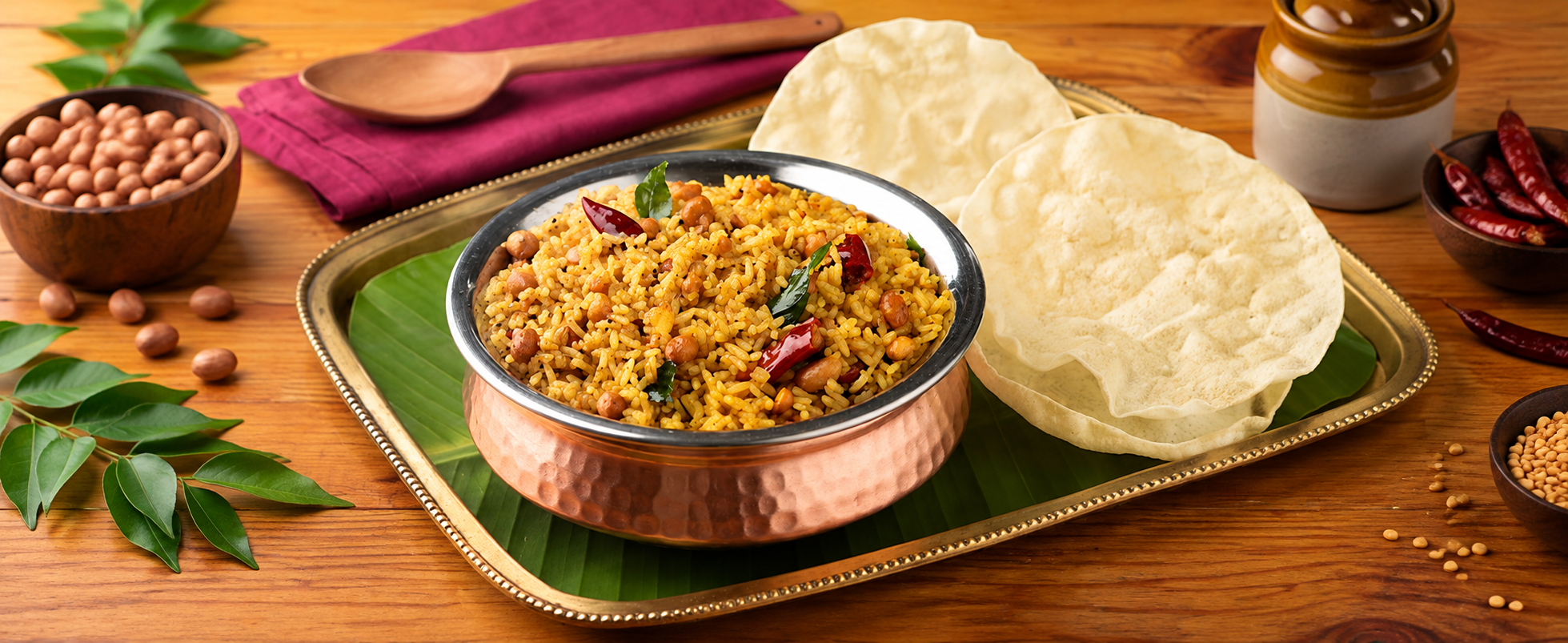
There is something deeply comforting about a South Indian meal: steaming rice, a little spice, a little tang, and the aroma of tadka crackling in hot oil. These are dishes our grandmothers made without measuring cups, and they still turn an ordinary weekday into something special.
Below are five traditional South Indian dishes: Bisi Bele Bath, Puliyogare, Vangi Bath, Rasam and Lemon Rice.
For each one you’ll find what it’s called across Karnataka, Tamil Nadu, Andhra Pradesh and Telangana, and how to make it easier at home.
1. What Is Bisi Bele Bath?
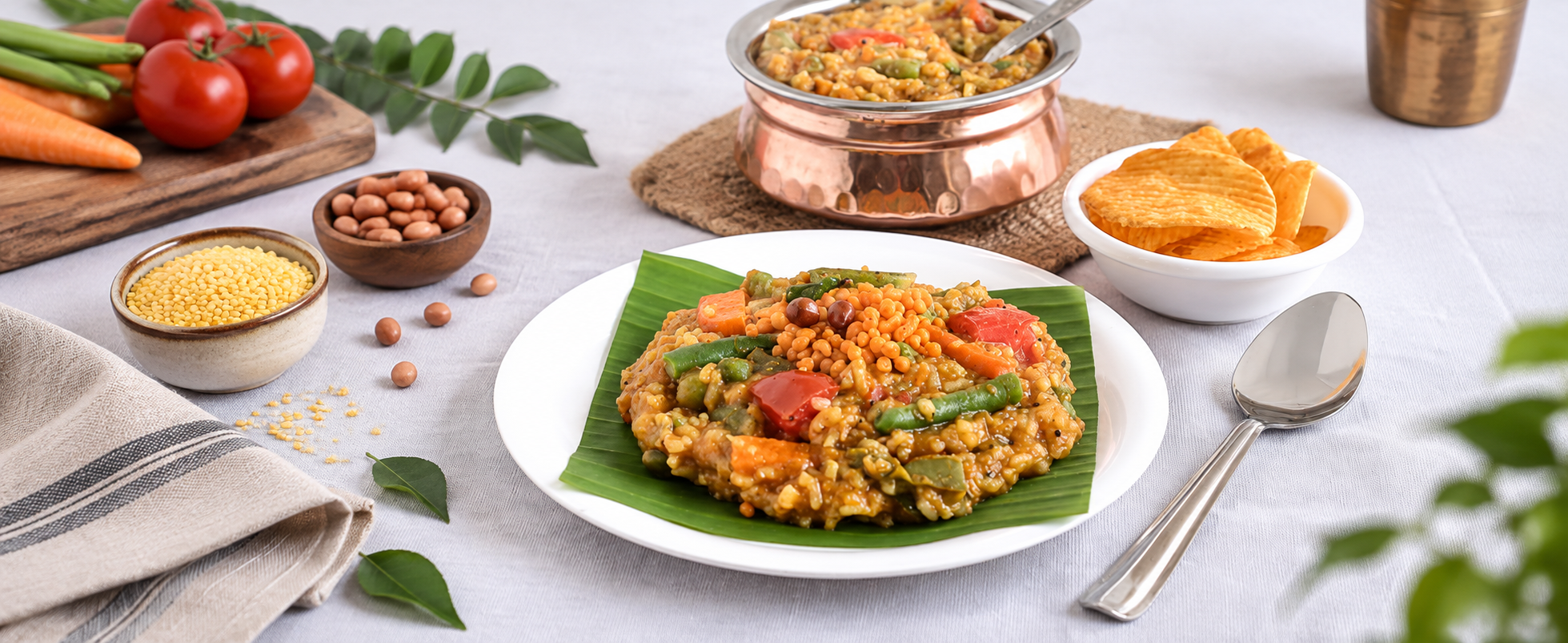
Bisi Bele Bath (ಬಿಸಿ ಬೇಳೆ ಬಾತ್) means “hot lentil rice” in Kannada. It’s a one-pot Karnataka classic of rice, toor dal, vegetables, tamarind and a roasted spice blend, finished with ghee and cashews.
Tamil homes make a similar dish called Sambar Sadam. It’s lighter on spice and closer to sambar mixed with rice.
Tip: Serve it hot with boondi or potato chips, the way it’s served in Bengaluru darshinis.👉 Make it easier with our Bisi Bele Bath Powder.
2. What Is Puliyogare ?
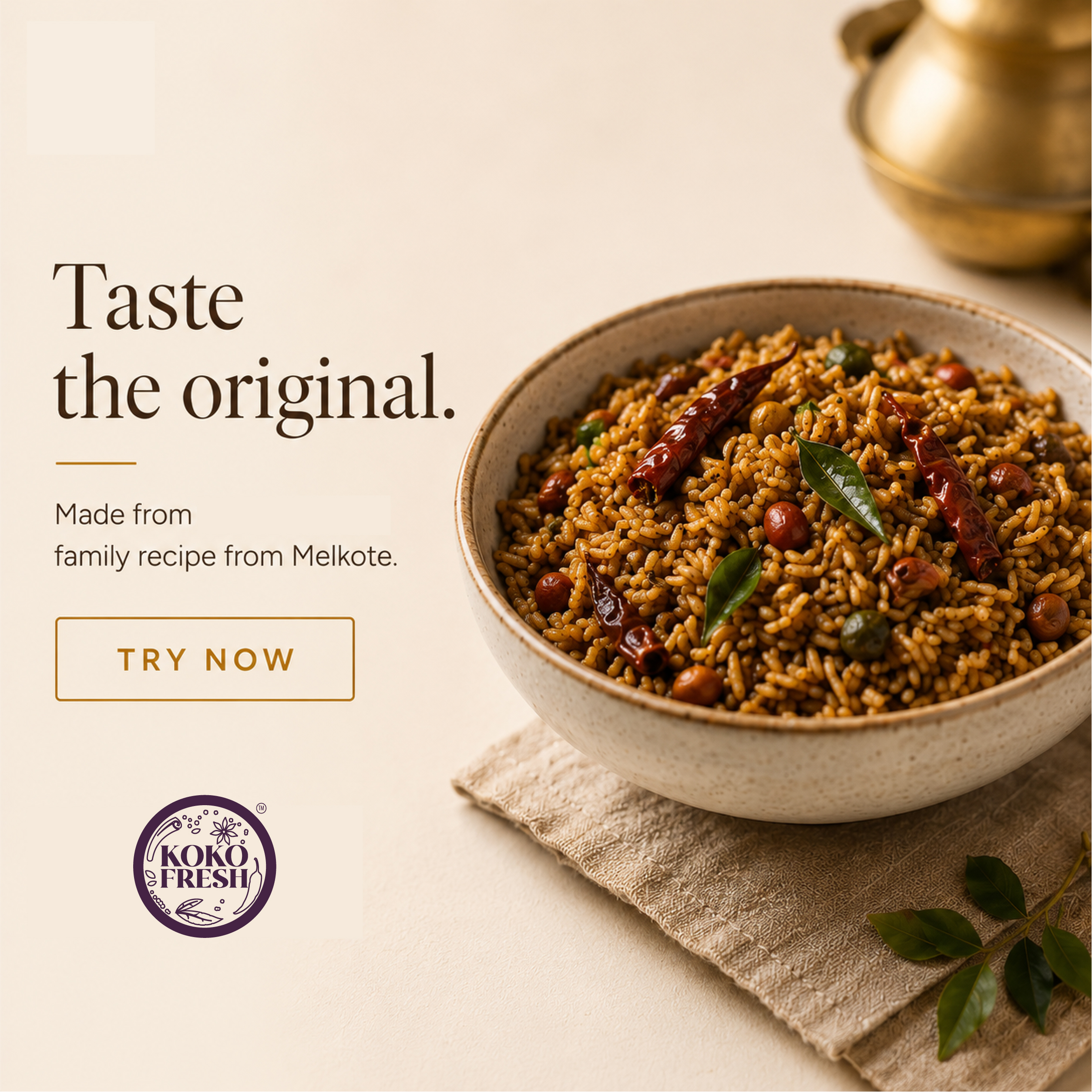
Puliyogare (ಪುಳಿಯೋಗರೆ) is a tangy tamarind rice loved across South India, and each state has its own name for it:
- Karnataka: Puliyogare
- Tamil Nadu: Puliyodarai or Pulisadam
- Andhra Pradesh and Telangana: Pulihora
It’s made with tamarind, jaggery, sesame, curry leaves, peanuts and a roasted masala. It tastes even better a few hours after mixing, which is why it’s a favourite for temple prasadam and travel.
Tip: Mix the gojju with rice and let it rest for 30 minutes before serving.👉 Try our Puliyogare Powder, hand-roasted by women artisans in Melkote.
3. What Is Vangi Bath?
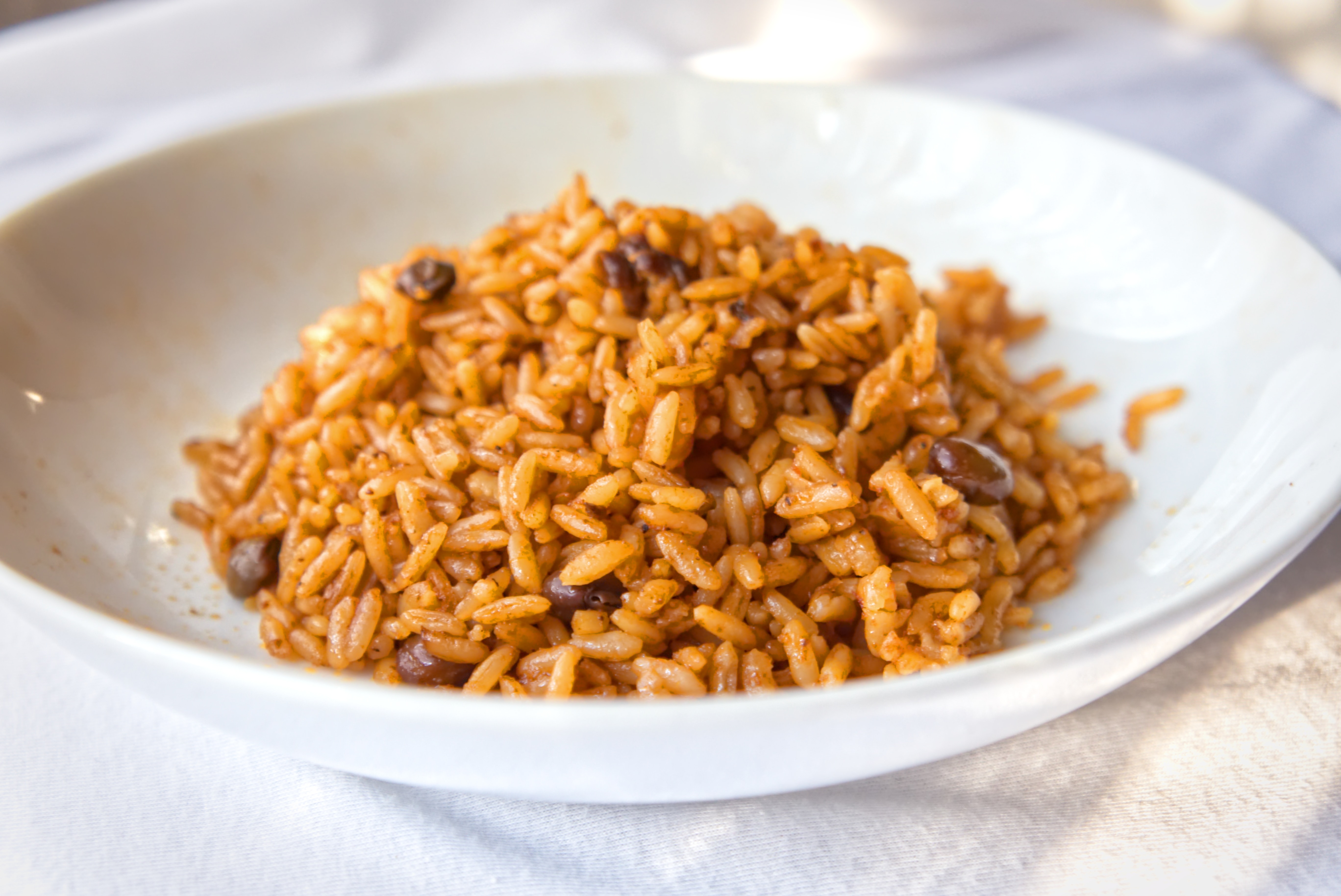
Vangi Bath (ವಾಂಗಿ ಬಾತ್) means “brinjal rice” in Kannada. Small brinjals are tossed with a fragrant blend of coriander, chana dal, cinnamon and dry coconut, then folded into rice. It’s a Karnataka lunchbox staple.
Tip: Use small purple brinjals and don’t overcook them. They should hold their shape.👉 Get the authentic taste with our Vangi Bath Powder.
4. Why Is Rasam on Every South Indian Table?
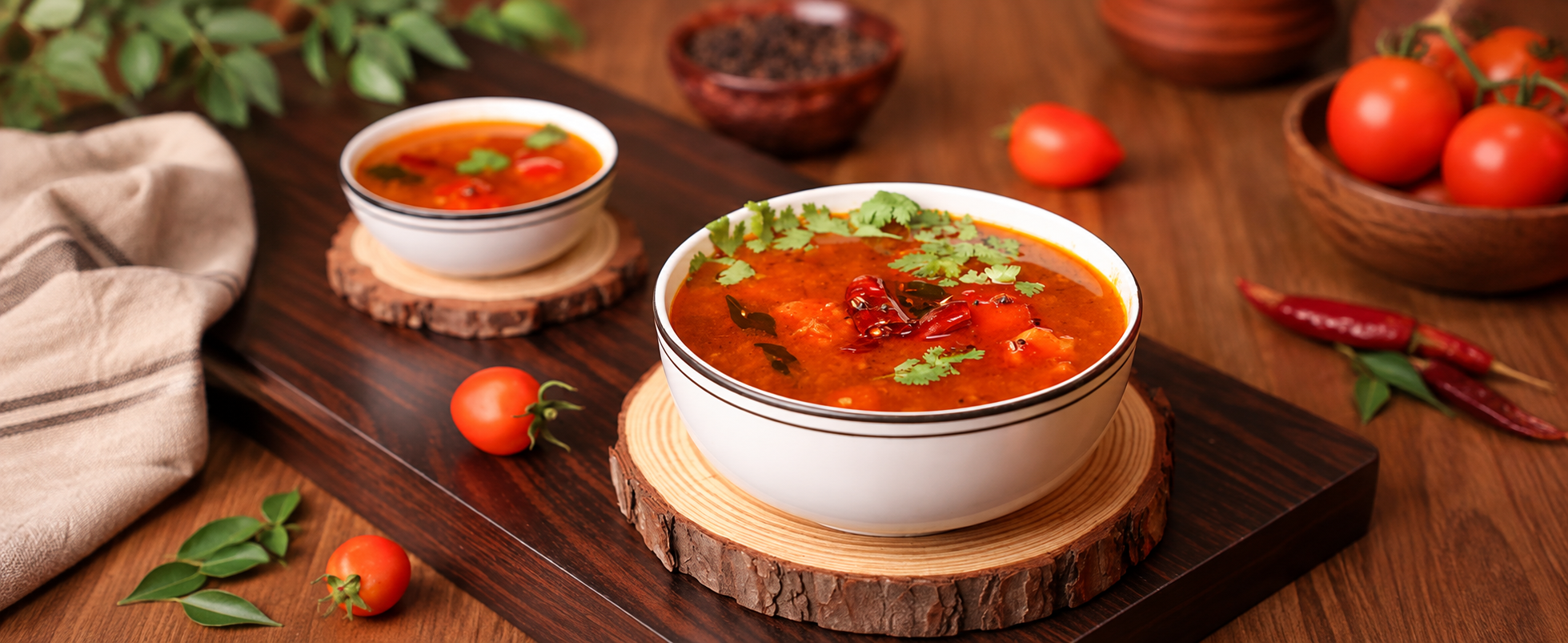
Rasam is a thin, peppery, tamarind-and-tomato soup. You can mix it with rice or sip it warm on its own. It’s known as Saaru (ಸಾರು) in Kannada and Charu in Telugu, and every household has its own version.
Tip: Add the rasam powder at the end and turn off the heat just as it froths. Never let it boil hard.👉 Our Mysore Rasam Powder is lab-tested for Ethylene Oxide, and the results are within FSSAI limits.
5. What Is Lemon Rice Called in Kannada?
Lemon Rice is called Chitranna (ಚಿತ್ರಾನ್ನ) in Kannada, Elumichai Sadam in Tamil and Nimmakaya Pulihora in Telugu. Cooked rice gets a tempering of mustard seeds, peanuts, curry leaves, green chilli and turmeric, finished with fresh lemon juice. It’s ready in 10 minutes.
Tip: Add the lemon juice after switching off the stove so it stays bright, not bitter.
Frequently Asked Questions
- What are some traditional South Indian dishes for everyday meals?Bisi Bele Bath, Puliyogare, Vangi Bath, Rasam and Lemon Rice are popular everyday South Indian dishes. All of them are simple, rice-based and full of flavour.
- What is Puliyogare called in Tamil?Puliyogare is called Puliyodarai or Pulisadam in Tamil.
- What is Puliyogare called in Telugu?Puliyogare is called Pulihora in Telugu.
- What is Rasam called in Kannada?Rasam is called Saaru in Kannada.
- What is Lemon Rice called in Kannada?Lemon Rice is called Chitranna in Kannada.
- Is Bisi Bele Bath the same as Sambar Sadam?They are similar but not the same. Bisi Bele Bath uses a richer Karnataka-style spice blend, while Sambar Sadam is milder.
Bringing Home-Style South Indian Cooking to Your Table
The beauty of traditional South Indian food is its variety. The same rice, tamarind and spices become completely different dishes across Karnataka, Tamil Nadu, Andhra Pradesh, Telangana and Kerala. Whatever you call it, Puliyogare, Pulihora or Puliyodarai, it brings families to the same table.
At KokoFresh, our masala powders are made from farm-traceable ingredients and hand-roasted in small batches by women artisans in Karnataka, exactly as it was done in grandmother’s kitchen.
Discussion
Leave a Comment
Note: Hateful comments or spam will be moderated.