
Every puliyogare has a hometown. Ours is Melkote.
Puliyogare is made across South India, but not every puliyogare tastes the same. The balance of tamarind, spice, lentils, sesame and sweetness changes from one place — and one kitchen — to another.
For KokoFresh, that place is Melkote.
Why Melkote, Not Just Puliyogare?
Melkote is a temple town in southern Karnataka — a place best known for the Cheluvanarayana Swamy temple and for a version of puliyogare that has been served here for generations, both in kitchens and as temple prasadam.
Over time, Melkote-style puliyogare developed its own recognisable balance: tamarind that is tangy but not sharp, spice that is warm but not aggressive, and a nutty depth from roasted sesame, coconut and lentils.
That balance is what we set out to preserve. Our Melkote Puliyogare Powder isn't a generic tamarind rice mix — it's a specific style, rooted in a specific place. When you cook with it, you're cooking a puliyogare that Melkote would recognise



Every spice has a home, and every home has a story.
A Flavour Shaped by Temple-Kitchen Traditions
The Melkote-style puliyogare tradition owes its character to what temple kitchens have always valued: consistency, restraint, and food that comforts rather than overwhelms. A dish served daily to devotees can't be too sharp or too heavy — it has to sit well, meal after meal, kitchen after kitchen. That expectation shaped the proportions: less chilli, more sesame, tamarind that lingers instead of stings, jaggery just enough to round the edges.
Our powder follows the same discipline. We roast the sesame slowly. We measure the tamarind against the coconut, not against the chilli. We finish with the traditional aromatics — pepper, cumin, curry leaves — in small quantities that support rather than dominate. The result is a puliyogare powder that tastes like Melkote, because it's made the way Melkote made it.
Not excessively sour. Not overly sweet. Not chilli-heavy. Just a slow, balanced flavour that stays with you.
Chaitra - The Hands Behind the Blend
Every batch of KokoFresh Melkote Puliyogare Powder is prepared by hand, in small quantities, by our artisan Chaitra in Mysore. She learned this recipe the way most Karnataka home cooks learn theirs — not from a written measure, but from a mother and grandmother who cooked it every week for decades. The proportions Chaitra uses today are the same proportions she was raised on.
She dry-roasts each ingredient separately, on a low flame, watching for the moment each one is ready. She grinds in small batches so nothing sits too long. She packs what will ship, and only what will ship — no long-shelf inventory, no stabilisers, no shortcuts.
What Makes KokoFresh Melkote Puliyogare Powder Different?
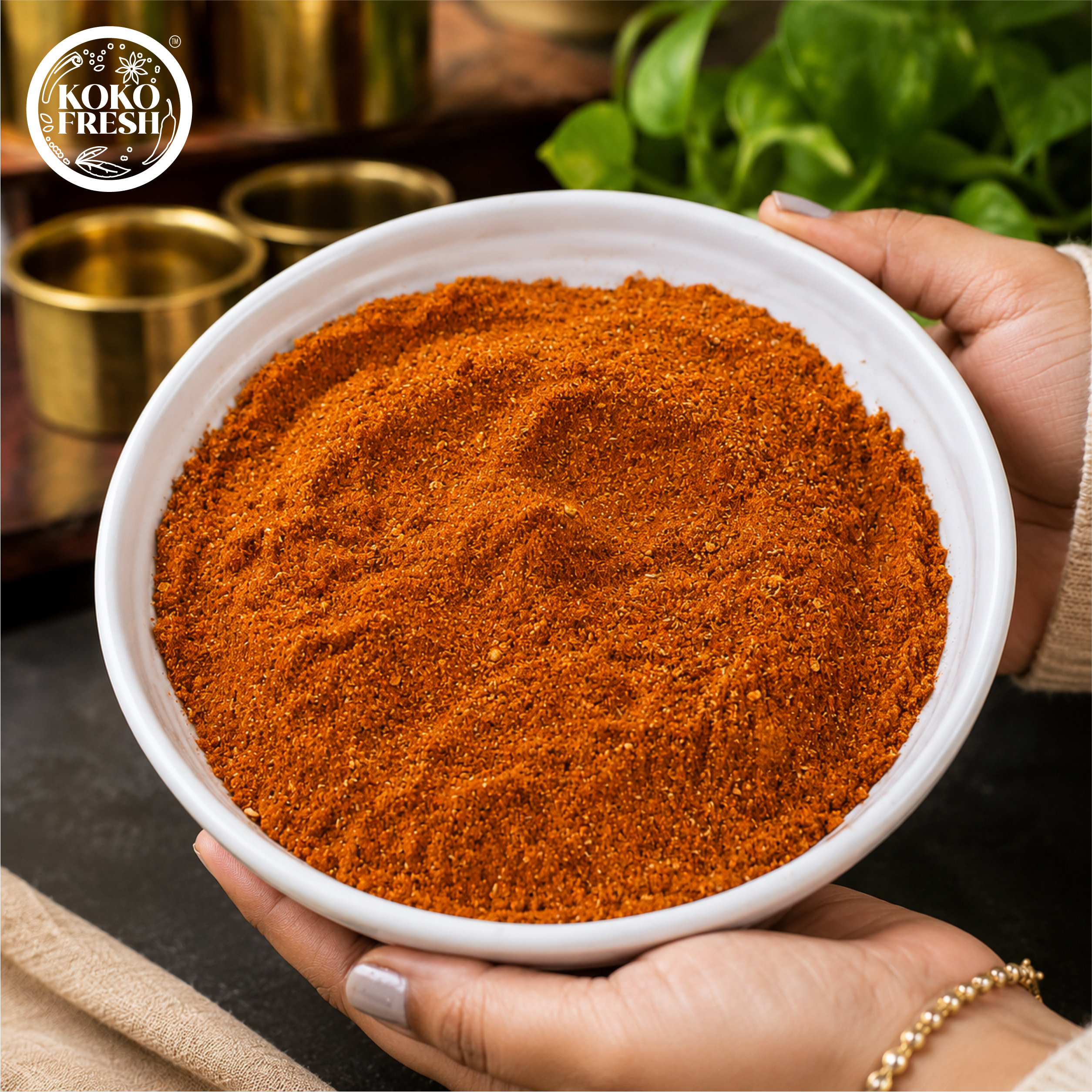
- Melkote-style proportions. The recipe follows the traditional Melkote balance — tamarind, lentils, sesame, coconut and mild spices in the ratios that have defined this style for generations. Not a generic South Indian tamarind rice mix.
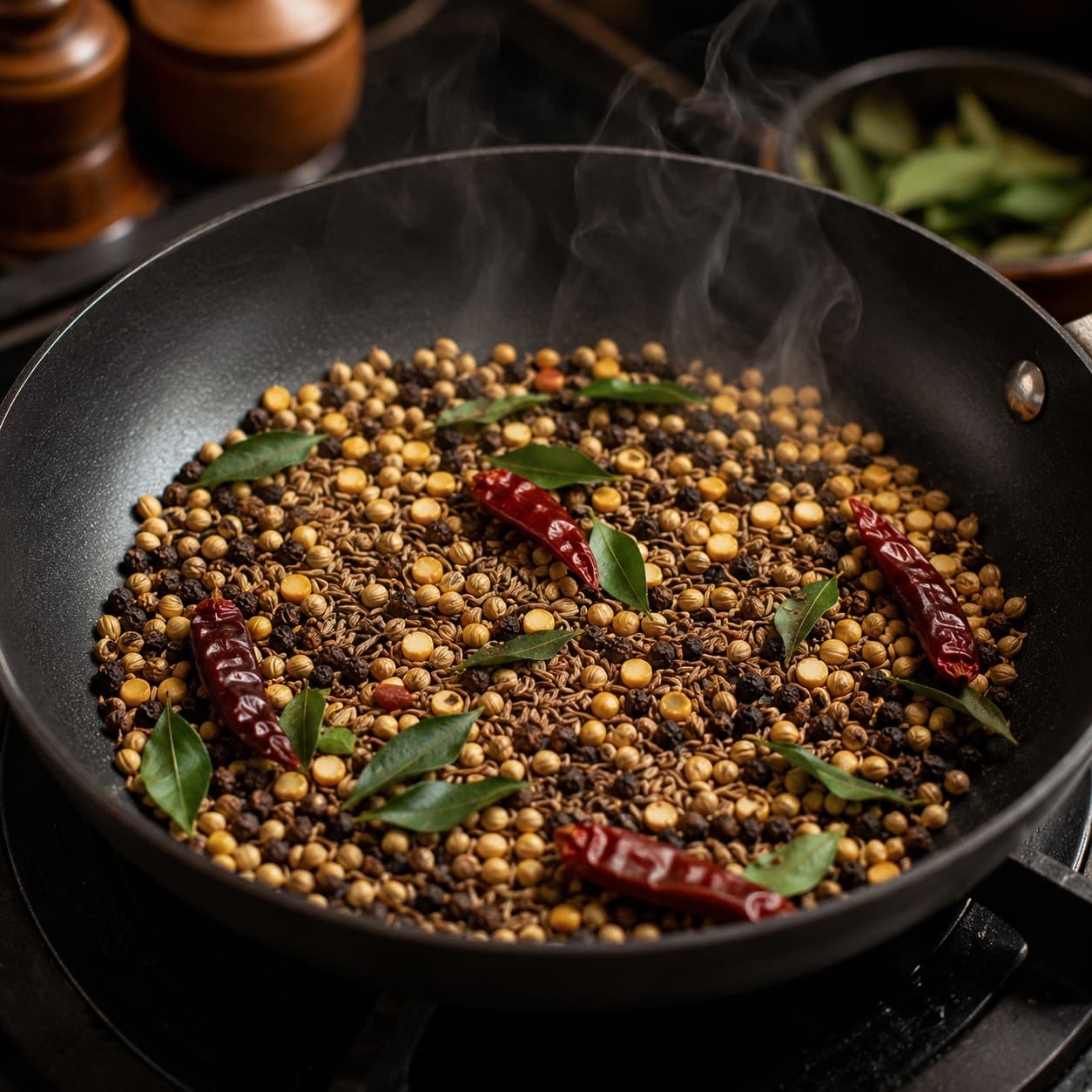
- Roasted ingredients, prepared separately. Sesame, urad dal, chana dal, coriander seeds and dried chillies are all dry-roasted individually on low heat — not blended raw or bulk-roasted. This is what gives the powder its aroma and depth.
- Balanced tamarind. Tangy, but not sharp. The tamarind is measured against the sesame and coconut, not against the chilli — so the finished dish carries flavour without bite.
- Small-batch preparation. Each batch is blended, ground and packed by hand in small quantities. What we ship is closer to freshly ground than long-shelved.
- No unnecessary additives. No preservatives, no artificial colour, no flavour enhancers, no stabilisers. The full ingredient list is short and printed on the pack.
How to Make Puliyogare at Home

Steps:
- Cook 1 cup of rice (short-grain sona masuri works well). Spread it on a wide plate to cool slightly so it doesn't clump.
- Add 2 to 3 tablespoons of KokoFresh Melkote Puliyogare Powder to the warm rice.
- Mix gently with the back of a spoon, so every grain is coated but not broken.
- Finish with a tempering: warm 1 tablespoon of sesame oil, add mustard seeds, a pinch of asafoetida, a few curry leaves and a handful of peanuts. Pour over the rice.
- Let the puliyogare rest for 5–10 minutes before serving. The flavour deepens as it sits.
Note: Serve with curd, papad, kosambari or a simple vegetable palya.
From Melkote to Your Kitchen
Melkote's puliyogare tradition was built over centuries in temple kitchens and home kitchens that valued care over speed. Our Melkote Puliyogare Powder is our attempt to carry that tradition forward, exactly as it was — the same proportions, the same slow-roasting, the same balance. Nothing modernised for convenience.
When you make puliyogare with this powder, you're not just cooking a South Indian dish. You're cooking Melkote's version of it — the one that grew up in temple kitchens, the one that Chaitra's family has been making for generations, the one that quietly reminds you of somewhere you may have never been but somehow already know
FAQ - Frequently Asked Questions
What is Melkote Puliyogare Powder?
Melkote Puliyogare Powder is a hand-blended spice mix that reproduces the traditional puliyogare (tamarind rice) style from the temple town of Melkote in Karnataka. Unlike generic puliyogare mixes, this style is characterised by a balanced tamarind flavour, prominent sesame and coconut, and a warm rather than sharp spice profile. KokoFresh's version is prepared in small batches by Chaitra, our Mysore-based artisan, using the traditional proportions.
How spicy is it?
Medium — closer to warm than hot. Melkote-style puliyogare is designed to be eaten as a full meal, so the heat is deliberately restrained. The tamarind and sesame carry the flavour; the spice is there to support, not dominate. If you want it spicier, add one extra dried red chilli while tempering.
How long does it stay fresh?
The powder is best consumed within 180 days of the packaging date. Store it airtight in a cool, dry place, away from direct sunlight and moisture. Because the blend contains sesame, coconut and peanut — all naturally rich in oils — the aroma is at its peak for the first three to four months. After that, it remains safe to eat but may taste milder; a light warming of the powder before mixing with rice will refresh the aroma.
Discussion
Leave a Comment
Note: Hateful comments or spam will be moderated.